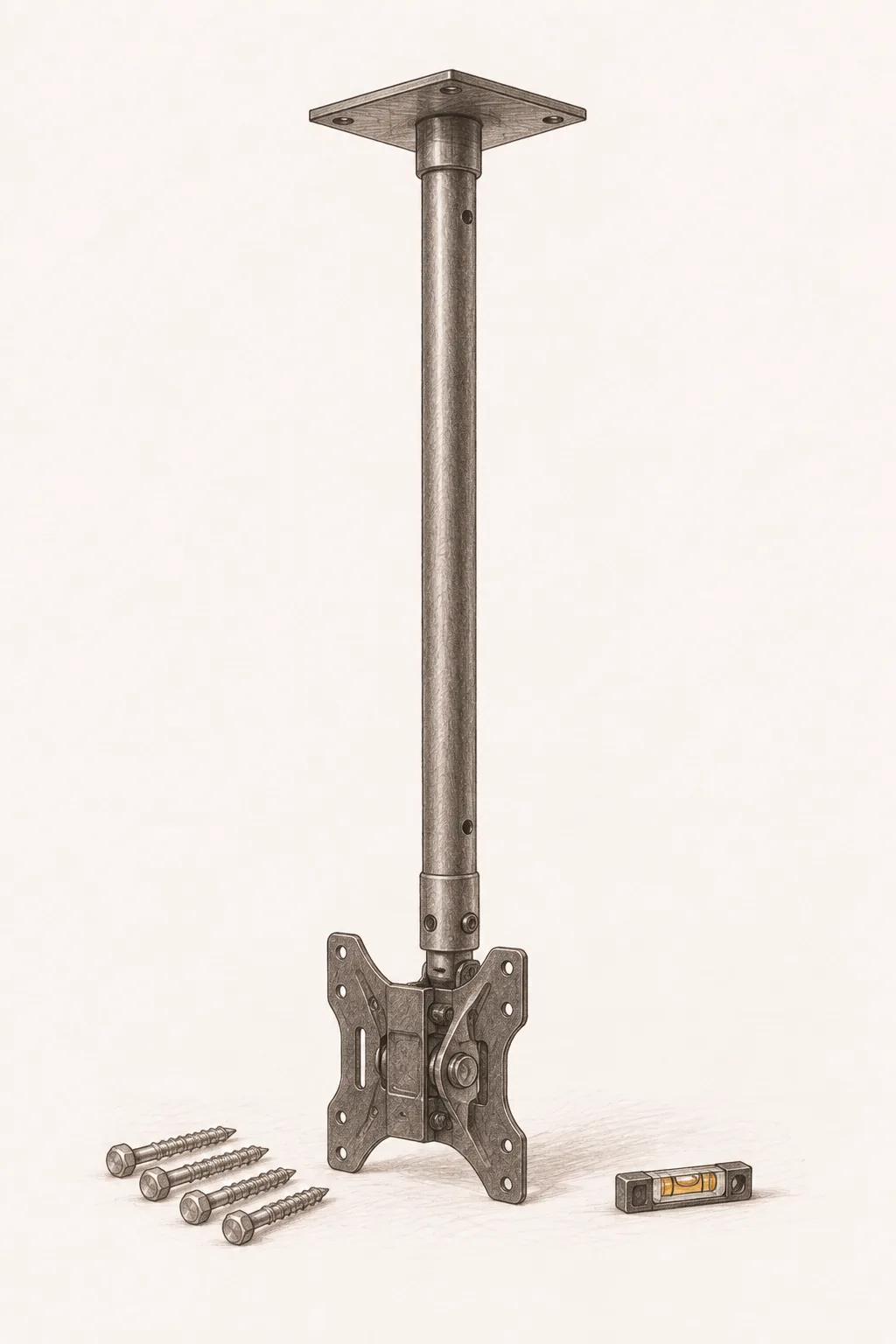
Best Ceiling TV Mount (2026): Picks for Rooms With No Wall Space
Mounts, cables and seating
A ceiling mount is the answer when there is no wall to hang a TV on, or when the wall is the wrong place for the room. These are the models that hold up, and the one installation rule nobody can skip.
Our picks
The best ceiling TV mount for most homes is the PERLESMITH PSCM2, because it handles the ordinary job well: a 55 or 65 inch TV hung from a normal ceiling, at a height that works with a couch. It is rated for 110 pounds, so even a big LED set is well inside the limit, and the pole extends far enough for an 8-foot room.
The WALI CM2665 is the one to buy if you want to spend less or you have a sloped ceiling, and the WALI CM3790 is the heavy-duty answer for a large screen in a room with high ceilings.
A ceiling mount is the fix for two problems: no wall to mount on, or a wall that is in the wrong place. A room with a fireplace, a wall of windows, or a workout area where every wall is taken can still get a screen if the ceiling is solid. The trade is that everything hinges on finding structure up there.
This sits in the same lane as the other mounting and setup guides. If a wall mount is still an option, the large TV wall mount guide covers the full-motion brackets, and the TV stand guide is the floor-level alternative when the wall and the ceiling are both awkward.
Where a ceiling mount makes sense
The obvious case is a room with no usable wall. A fireplace wall, a wall of sliding doors, or a kitchen island with nothing to hang on all push the TV to the ceiling.
The second case is a room that gets rearranged. A ceiling mount swivels, so a screen can face the couch, then the kitchen, then the treadmill without moving furniture. That is why these show up in garages, gyms, and patios as often as living rooms.
The third case is a commercial space. Bars, waiting rooms, and clinics use ceiling mounts because they need the picture visible from every seat and the walls are already full.
Best overall: PERLESMITH PSCM2
The PERLESMITH PSCM2 is the top pick because it does the standard job without drama. It fits 26 to 65 inch TVs up to 110 pounds, with VESA patterns from 100x100 to 400x400, which covers nearly every mainstream set.
The pole extends 20.47 to 29.92 inches from the ceiling to the centre of the plate, so a normal 8-foot ceiling lands the TV at eye level from a couch. The head swivels a full 360 degrees, tilts from +5 down to -15 degrees, and levels with a small tweak after it is hung.
The trade is that it is a fixed-pole design. It does not fold flat against the ceiling, so the TV is always visible. For a multi-use room where the screen needs to disappear, a flip-down mount is the better buy.
See the PERLESMITH PSCM2 ceiling mount on Amazon for the current price.
The value pick and the big-screen pick
The WALI CM2665 is the budget alternative and one of the most reviewed ceiling mounts anywhere, with a 10-year warranty that is rare at this price. It holds the same 26 to 65 inch screens up to 110 pounds, and it handles flat, sloped, and vaulted ceilings or even the side of a joist, which is the trick for an unfinished basement.
Height adjusts in 2-inch steps and the head tilts 25 degrees down. If the top pick is out of stock or you want to save about ten dollars, this is the one to take.
The WALI CM3790 is the heavy-duty pick for a large screen. It is rated to 220 pounds for TVs from 37 to 90 inches, and it drops 29.9 to 35.8 inches below the ceiling, aimed at tall and vaulted rooms where a standard pole leaves the screen too high. Tilt is a modest 18 degrees and the swivel is a full 360, which is the right balance for a big set that mostly stays put.
The one installation rule
Find a joist. This is the part that decides whether the mount is safe, and it is the same for every model here.
A ceiling is usually drywall over wooden joists, and drywall alone will not hold the weight of a TV on a lever. Use a stud finder, mark the joist, and drive the supplied lag bolts into it. If the spot you want has no joist, either move the mount or bridge two joists with a solid piece of lumber first.
The second rule is the drop height. Sit where you will watch from and pick a mount whose pole range puts the centre of the screen at eye level. Ceiling mounts often sit a little high, and the adjustable heads on these models let you tilt the screen down to compensate.
The third rule is weight margin. A mount rated to 110 pounds is plenty for a TV that weighs 30, and the extra capacity is what keeps the pole from flexing at full extension.
Who should skip a ceiling mount
Skip it if the wall is fine. A wall mount is cheaper, easier to install, and easier to adjust later. The ceiling is the answer when the wall is not an option.
Skip it if the ceiling is not solid. A drop ceiling, a drywall-only ceiling, or a rented space where you cannot drill into structure rules out every mount here.
Skip it if you want the TV hidden between uses. A fixed-pole mount keeps the screen in view. A flip-down model is the one that folds up out of the way.
Common questions
Will a ceiling mount hold a 65 inch TV? Yes. The standard picks here are rated to 110 pounds and fit up to 65 inches with a 400x400 VESA pattern, which covers most 65 inch sets. A heavier or larger screen should go on the 220-pound heavy-duty mount.
Can two people install a ceiling TV mount? Two people make it much easier and are worth arranging. One lifts and holds the TV while the other drives the bolts, and the hardest part is lining up the plate on a ladder.
Does a ceiling mount come with the hardware? Every mount here includes a hardware kit, but you still need to confirm your ceiling is wood, concrete, or brick. If your ceiling is tile over drywall, add a solid mounting surface before you start.
Frequently Asked Questions
Is a ceiling TV mount safe?
Yes, when it goes into structure. Every mount here must be fixed to a wood joist, concrete, or brick, never drywall alone. A ceiling mount rated to 110 pounds holds a TV that weighs far less, which is why most people never come close to the limit.
What size TV can a ceiling mount hold?
The common ceiling mounts fit 26 to 65 inch screens up to about 110 pounds. For a 75 or 90 inch set you need a heavy-duty model rated to 220 pounds, like the big-screen pick on this page.
How far below the ceiling does the TV hang?
The picks here drop 20 to 30 inches to the centre of the plate, which suits a standard 8-foot ceiling. A tall or vaulted room needs the heavy-duty model that reaches about 36 inches.
Can a ceiling mount go on a sloped or vaulted ceiling?
Some can. The WALI CM2665 and the heavy-duty CM3790 both handle sloped and vaulted ceilings, and the CM2665 can also sit flat against the side of a joist. Check the listing before you buy, because not every ceiling mount supports an angled surface.
Do I need to find a joist to install a ceiling TV mount?
Yes. A ceiling is often just drywall over a joist, and drywall alone will not hold a TV. Use a stud finder, drill into the joist, and use the supplied lag bolts. If there is no joist where you want the screen, add a cross-piece or pick a different spot.
What is the difference between a ceiling mount and a flip-down mount?
A ceiling mount holds the TV in place, usually on a fixed pole with a tilting and swivelling head. A flip-down mount folds the screen flat against the ceiling when it is not in use. If you want the TV out of sight in a gym or a multi-use room, look for a flip-down model instead.
Can I swivel a ceiling-mounted TV toward the couch?
Yes. Every pick here has a 360 degree swivel, so you can point the screen at the seating, the kitchen, or the treadmill and turn it back when you are done.
Do ceiling TV mounts work for outdoor patios?
They can, if the mount is rated for it and the ceiling is solid. Several models here list patio and gazebo use, but check the corrosion finish and keep the TV itself out of direct weather unless it is an outdoor-rated set.